
An electric kettle heats water with a built-in electric element; a whistling kettle uses an external heat source, such as a suitable stove. Which is better suited to you depends mainly on your kitchen and how you use it. There is no single winner for every household.
The main differences
| Feature | Electric kettle | Whistling kettle |
|---|---|---|
| Heat source | Mains socket, voltage depending on the model | Suitable stove or other permitted heat source |
| Stopping heat | Often automatic; check the features | Usually switched off manually at the heat source |
| Temperature setting | On models with controls | Not automatically by the whistle |
| Place in the kitchen | Countertop space | Uses a stove zone while heating |
When is an electric kettle convenient?
An electric kettle is practical if you regularly prepare water without freeing up a stove zone. Temperature control can be useful for green tea or matcha. Do check the available settings: a digital display does not automatically mean you can choose any temperature.
In addition to the maximum capacity, pay attention to the minimum fill and the weight. For a single mug, an easily readable scale can make a big difference. A removable limescale filter and a wide opening are also useful for daily maintenance.
When is a whistling kettle better suited?
A whistling kettle is appealing if you prefer to use your stove or do not want an additional electrical appliance on the countertop. Check the compatibility explicitly. Not every metal kettle works on induction, and not every handle is suitable for all heat sources.
Stay nearby while the kettle heats up. The whistle does not automatically switch off the heat source. A hot handle, steam at the lid and the spout remain points of attention, even with a small model.
Which is cheaper to use?
You cannot tell that from the product type alone. You need the energy used per boil and your own electricity or gas rate. Compare the same amount of water with the same starting and ending temperature. The efficiency of the stove, the contact with the base and heat loss affect the outcome.
For an electric kettle, you can multiply power by heating time as a first estimate. Read our calculation example for electricity consumption. Comparing only the liter capacity or purchase price does not give a reliable answer about the running costs.
Make your choice based on three questions
- Which heat source do you want to use?
- Do you need adjustable temperature, or just boiling water?
- How much water do you usually make at a time?
Then look at the suitable electric kettles or whistling kettles. This way you compare products based on your usage instead of a general preference for electric or traditional.
Products in this guide
Compare these models if you are looking for an electric kettle or whistling kettle. Check the features and usage instructions on the product page.

Midea stainless steel kettle – 1.7 liters
Check the temperature settings and features for your daily hot drinks.
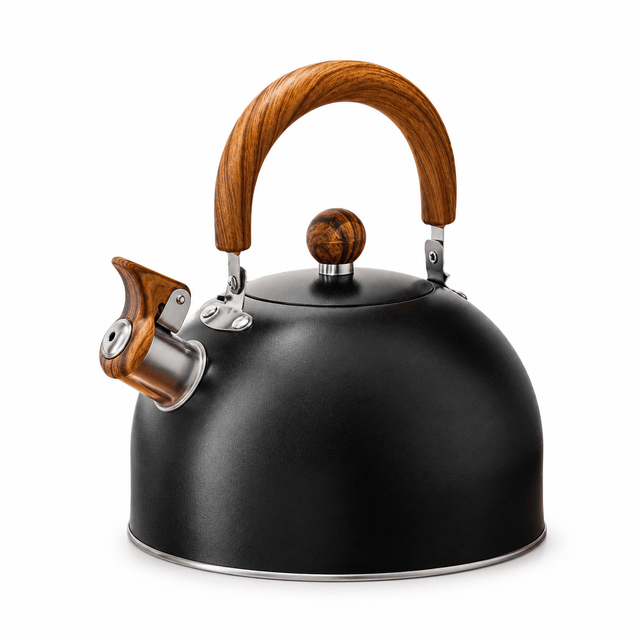
Stainless steel whistling kettle for induction – 2.5 or 3 liters
Choose the capacity and check if the base fits your stove.


