
Clean a whistling kettle only when it has cooled completely and use only products suitable for the material and finish. Stainless steel, enamel and coloured coatings do not always require the same treatment. Therefore, read the care instructions before using vinegar, descaler or an abrasive.
First check where the residue is located
A light layer on the inside may be limescale. The outside may have grease splashes, water marks or discolouration from heating. Do not automatically use the same cleaner for both. A cleaner for the outside may not be suitable for the reservoir in which you heat drinking water.
Descaling the inside
- Remove the kettle from the heat source and let it cool.
- Pour out any remaining water and rinse out loose particles.
- Check which descaling agent the manufacturer permits.
- Measure out and treat according to the instructions for the kettle and the agent. Heat only if the method prescribes it.
- Pour out the cooled solution and rinse thoroughly with clean water.
- Perform any prescribed additional boiling and rinsing cycles.
Do not mix cleaners and do not try to pry away stubborn limescale with a knife. You cannot repair a damaged protective layer this way. If the residue remains, repeat only an approved treatment or ask the manufacturer for advice.
Lid, spout and whistling mechanism
Check that the lid closes properly and that there is no visible residue around the opening. Carefully clean any accessible parts. Only disassemble a whistling mechanism if the manual explains how to do so. Do not push a needle into small openings and do not modify the mechanism to make it louder.
A whistle is a warning, not a substitute for supervision. If the sound does not occur, do not let the kettle continue to boil dry. Turn off the heat and only inspect it once it has cooled.
Keeping the outside looking good
A soft cloth with an approved mild cleaning agent is usually a better starting point than hard scrubbing. Rinse away any residue and dry. Do not simply put a kettle with an unknown coating, wooden parts or glued sections in the dishwasher. When using gas, the flame should remain beneath the base; a flame that is too wide can overheat the side and handle.
How to prevent new problems?
- Respect the fill marks and never let the kettle boil dry.
- Regularly check the inside and the closure of the lid.
- Let the kettle dry thoroughly after cleaning before storing it.
- Do not use a more aggressive agent to save time.
Do you see persistent corrosion, loose parts or damaged coatings on the inside? Ask for an assessment first. If replacement is necessary, then compare our whistling kettles on heat source, capacity and maintenance. A beautiful colour alone does not indicate whether a kettle is suitable for your stove.
Products in this guide
Compare these models if you are looking for a kettle or whistling kettle. Check the features and usage instructions on the product page.
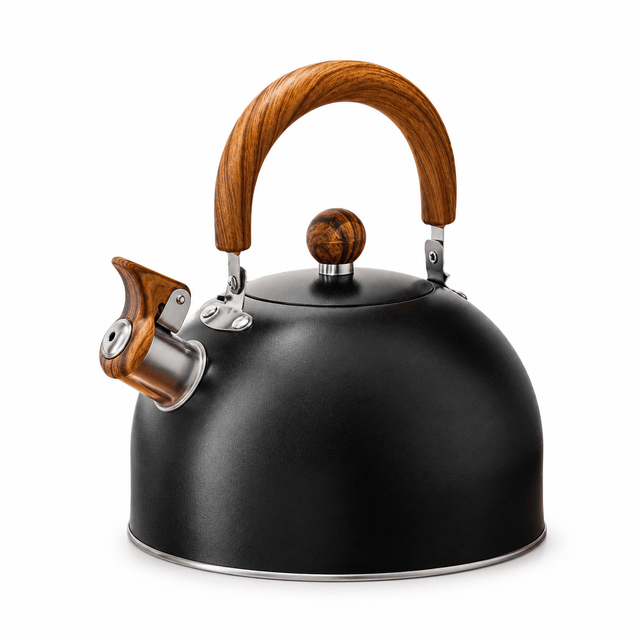
Stainless steel whistling kettle for induction – 2.5 or 3 litres
Choose the capacity and check that the base is suitable for your stove.
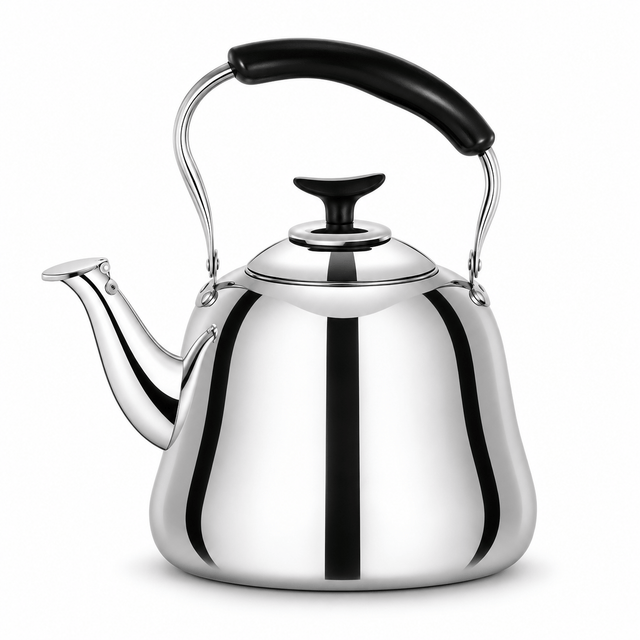
Stainless steel whistling kettle – 1 litre
A compact whistling kettle; check the heat source and usage instructions.


